Corneal Diseases, Disorders, Infections, Surgery and LASIK Eye Surgery
The cornea is the clear front lens of the eye bending light and protecting the sensitive internal tissues. It requires adequate moisture from the tears and protection from the environment by lids that can blink completely. The front surface is called the epithelium. The back surface is the endothelium which keeps the cornea clear. The stroma, comprising 90% of the cornea, is made from collagen. There are numerous nerves that make the cornea sensitive to pain, but there are no blood vessels, allowing the cornea to remain clear.
The following is an abbreviated list of corneal disorders and their most frequent causes:
- Foreign body: lashes that turn in, abnormal lid configurations, and paint, metal and other foreign materials
- Punctate keratitis: the most common cause of these small dot-like defects in the corneal epithelium is dry eye syndrome. Preservatives, most commonly, BAK in standard eye drops and wetting solutions can be very irritating to the cornea and are often overlooked. Chemicals, contact lenses and eye drops can cause this condition. Always take artificial tears with you in airplanes and dry environments.
- Chemical burns can be caused by acid or base chemicals, which are delivered from occupational accidents or intentionally as a weapon. Biological elements such as mustard gas can cause the same corneal ulceration and scarring.
Infections of the Cornea
- Pink eye is the most frequent and most infectious cause of conjunctivitis with occasionally long lasting corneal inflammation. It is often seasonal, bilateral and highly contagious requiring frequent hand washing and prescription eye drops.
- Herpes simplex lives in our tears and saliva, which can be triggered by sunlight, decreased immunity, injury, and even too much nuts and chocolate.
- Herpes zoster, better known as shingles, should involve multiple layers of the eye and requires rapid treatment.
- Trachoma is a type of conjunctivitis that can cause corneal scarring and is common in much of the developing world.
- Soft contact lenses may harbor bacteria, which is the most frequent cause of serious corneal ulcers in the United States.
- Parasites, such as acanthamoeba, cause devastating corneal diseases. River blindness is caused by a different organism in Western Africa. There are specific therapies for each of these diseases.
- Trauma: people really do “watch out”, making the eye a very vulnerable part of the body. Whether at work, doing recreational activities, or taking care of household chores, everyone should use eye protection.
Degenerations and Dystrophies
Corneal degenerations can occur in one or both eyes, are often superficial and usually do not significantly alter vision. Corneal dystrophies on the other hand usually are bilateral, can occur at an early age and may be present in any three layers of the cornea. The following are some of these disabling conditions.
- They may consist of bilateral surface opacities called fingerprint or anterior membrane dystrophies.
- There is a large variety of corneal stromal dystrophies some of which have specific genetic causes.
- Fuch’s endothelial dystrophy is a common one and has two distinct classes, only one of which continues to progress requiring corneal transplantation.
- Keratoconus: is a condition with thinning of the cornea so that it takes a cone shape instead of a hemispherical contour. 90% of people will have a mild case of keratoconus and only small amounts of aberration of vision; these people may find that they cannot be corrected to 20/20 vision. However, 10% will progress such that contact lenses will be required and ultimately the cornea may thin so much that cornea transplantation is the only resort.
Many conditions cause permanent opacity and scarring. Occasionally a rigid contact lens will significantly improve vision. Otherwise surgery is required.
Complimentary Treatments For Corneal Disease
- Vitamin A is the treatment for night blindness and corneal thinning. Deficiency in vitamin A can be due to starvation or alcoholism.
- Vitamin C strengthens the cornea after any injury. I also encourage patients to use 1000-2000 mg of vitamin C after cornea or cataract surgeries.
- Omega-3 Fatty Acids produce non-inflammatory components that maintain the tear film (responsible for lubricating the cornea). They remain the standard of therapy for contact lens wearers, dry eyes, and after cornea or lid surgery
- Lysine (500 mg), Zinc (15 mg), and vitamin C (1000 mg) will help prevent recurrences of the herpes simplex virus.
Traditional Corneal Therapies
- Antibiotic therapy remains the basic treatment for infections, dry eyes, burns, and foreign bodies.
- For patients with keratoconus, there is a new technique for cross-linking collagen using riboflavin and ultraviolet light. This shrinks the cornea so the contact lenses can then be worn comfortably once again.
- Penetrating corneal transplantation is the standard for removing vision-impairing corneal scars. This remains the standard for diseases that involve all the layers of the cornea, herpes ulcers and scars with irregular thinning.
- There are new procedures being used such as the partial fitness cornea transplant (DALK) and DSEK. DSEK consists of removing the back layers of the cornea and replacing them with a clear button through a very small incision. This has become the procedure of choice for Fuch’s dystrophy and corneal disturbances that may arise as a complication of cataract surgery.
- Synthetic corneas are being used experimentally for anterior corneal diseases in some cases. Lastly, there are three artificial corneal models that can be employed when corneal tissue transplantation is not advisable. The most popular model is the Boston KPro.
LASIK Eye Surgery
LASIK (laser-assisted in situ keratomileusis) eye surgery and its variations have become common methods of altering the shape of the cornea to treat near-sightedness, far-sightedness, and astigmatism of moderate amounts. The surgery is performed under a topical anesthetic (eye drops). A thin layer of corneal surface tissue is folded back and then light from an Excimer laser removes a thin layer of corneal tissue. The flap is replaced, a contact lens is then placed over the eye and patient’s vision is almost perfect right away.
An older laser procedure was called PRK (Photorefractive keratectomy). This has been replaced by EPI-LASIK surgery. In this case the laser is applied without the need to create a corneal flap. This is useful for smaller amounts of correction and for those who do not want any potential complication due to making a corneal flap.
There are customized procedures using modern WaveFront technology so that microscopic irregularities in the cornea are smoothed over. If considering LASIK, you should have a screening examination and ask your ophthalmologist which would be the most appropriate procedure for you.
LASIK and its derivatives have become so standard that the military is encouraging its soldiers who will be entering potential conflict zones to have the procedure done. This way they can return to action sooner and not risk any difficulties wearing spectacles or contact lenses.
Unlike the older PRK procedure, people with LASIK will not get fluctuations of vision at high altitude. UV blocking sunglasses are highly recommended for all people but especially for anyone who has had corneal disease or corneal surgery of any kind.
Eye Complex CS
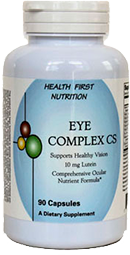
total body, multi-
vitamin formulated
by Dr. Robert Abel
for patients unable
to get essential eye
nutrients through
diet alone.
"Dr. Robert Abel is a healer for
the 21st century."
Mehmet Oz, M.D. (Dr. Oz)
Now Available
to the Public
- 23 Essential Nutrients
- More Lutein
- NO Copper
- Normal Zinc Levels
- Money-Back Satisfaction
Guarantee
Discussions with Dr. Abel

The Eye Care Revolution
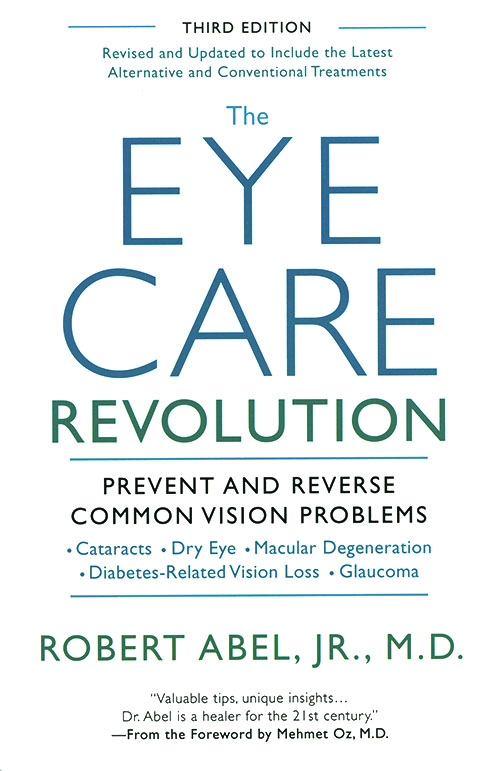
Over 100,000 copies sold! From high-tech laser treatments to centuries-old Asian remedies, Dr. Abel's authoritative guide explains natural and conventional methods to prevent and even reverse many common vision disorders.
Dr. Abel’s Children’s Books
Dr. Abel’s Mystery Novels


Follow Us